Computer : Hardware

1. System Unit

– The main part of a microcomputer, sometimes called the chassis. Itincludes the following parts: Motherboard, Microprocessor, Memory Chips, Buses,Ports, Expansion Slots and Cards.

2. Motherboard / Mainboard / System Board

– The main circuit board of acomputer. It contains all the circuits and components that run the computer.

https://en.wikipedia.org/wiki/Motherboard

3. CPU (Central Processing Unit)

The processor is the main “brain” or “heart” of a
computer system. It performs all of the instructions and calculations that are needed and manages the flow of information through a computer.
AMD Rizen CPU 7 in socket


https://www.digitaltrends.com/computing/what-is-a-cpu/

4. Primary storage

– (internal storage, main memory or memory) is the computer’s working storage space that holds data, instructions for processing and processed data (information) waiting to be sent to secondary storage. Physically, primary storage is a collection of RAM chips.

Two (2) Types of Memory

ROM

 (Read Only Memory) ROM is non-volatile, meaning it holds data evenwhen the power is ON or OFF.
Amiga 1200 Kickstart 3.0 ROM Chips

RAM

 (Random Access Memory) RAM is volatile, meaning it holds data onlywhen the power is on. When the power is off, RAM’s contents are lost.


https://uae.souq.com/ae-en/kingston-4gb-ddr3-1333-ram-for-laptop-6668520/i/

5. Expansion Bus

 – A bus is a data pathway betweenseveral hardware components inside or outside acomputer. It does not only connect the parts of the CPU toeach other, but also links the CPU with other importanthardware.

6. Adapters

– Printed-circuit boards (also called interfacecards) that enable the computer to use a peripheraldevice for which it does not have the necessaryconnections or circuit boards. They are often used topermit upgrading to a new different hardware.

http://www.networktos.com/wired-and-wireless-computer-network-adapters-explained.html

7. Power Supply Unit (PSU)
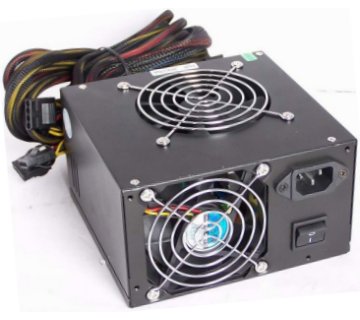
– Installed in the back cornerof the PC case, next to the motherboard. It converts120vac (standard house power) into DC voltages that areused by other components in the PC.
A typical ATX power supply unit

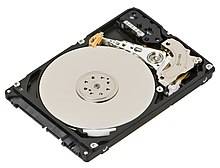
8. Hard Disk Drive (HDD) 

– Also known as hard drive,is a magnetic storage device that is installed inside thecomputer. The hard drive is used as permanentstorage for data. In a Windows computer, the harddrive is usually configured as the C: drive and containsthe operating system and applications.
Laptop-hard-drive-exposed.jpg


https://en.wikipedia.org/wiki/Hard_disk_drive

9. Optical Drive

– An optical drive is a storagedevice that uses lasers to read data on the opticalmedia. There are three types of optical drives:Compact Disc (CD), Digital Versatile Disc (DVD)and Blu-ray Disc (BD).

https://en.wikipedia.org/wiki/Optical_disc_drive

10. Digital Versatile Disc (DVD)
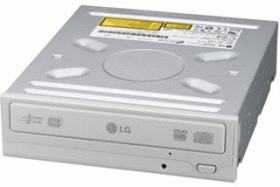
– Designed tooptically access data stored on a DVD. A lasermoves back and forth near the disk surface andaccesses data at a very fast rate.

What are the input and output devices of a computer?

The devices attached to a personal computer can be classified into two- the input and outputdevices.


Input Device

– is composed of a device that accepts dataand instructions from the user or from another computer system.

Output Device

 is any piece of computer hardware that displays results after the computerhas processed the input data that has been entered.

Two (2) Types of Input Devices


1. Keyboard Entry

 – Data is inputted to the computer through a keyboard.

    Keyboard

– The first input device developed for the PC. Data is transferred tothe PC over a short cable with a circular 6-pin Mini-din connector that plugsinto the back of the motherboard.

2. Direct Entry

A form of input that does not require data to be keyed by someonesitting at a keyboard. Direct-entry devices create machine-readable data on paper,
or magnetic media, or feed it directly into the computer’s CPU.

Three Categories of Direct Entry Devices


1. Pointing Devices 

– An input device used to move thepointer (cursor) on screen.

    Mouse
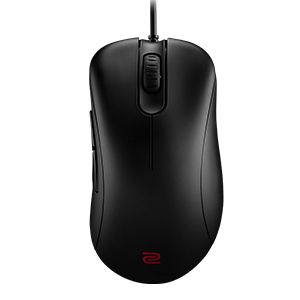
 – The most common ‘pointing device’ usedin PCs. Every mouse has two buttons and mosthave one or two scroll wheels.

Touch screen

– A display screen that is sensitive to the touch of a finger orstylus. Used in myriad applications, including ATM machines, retail point-of-sale terminals, car navigation and industrial controls. The touch screenbecame wildly popular for smart phones and tablets.

Light Pen 

 – A light-sensitive stylus wired to a video terminal used to draw pictures or select menu options. The user brings the pen to the desired point on screen and presses the pen button to make contact.

https://alexnld.com/product/portable-3-in-1-touch-screen-stylus-ballpoint-led-light-pen-for-ipad-iphone/

Digitizer Tablet 

– A graphics drawing tablet used for sketching new images or tracing old ones. Also called a “graphics tablet,” the user contacts the surface of the device with a wired or wireless pen or puck.Often mistakenly called a mouse, the puck is officially the “tablet cursor”.
Digitizer tablet The WACOM Specifications are listed below [4][5][6]: @BULLET Active Area (W x D) 157.5 x 98.4 mm  

https://www.researchgate.net/figure/Digitizer-tablet-The-WACOM-Specifications-are-listed-below-456-BULLET-Active-Area_fig2_283659266

2. Scanning Devices

– A device that can read text or illustrations printed on paper and translates the information into a form the computer can use.

3. Voice – Input Devices 

– Audio input devices also known as speech or voicerecognition systems that allow a user to send audio signals to a computer forprocessing, recording, or carrying out commands. Audio input devices such asmicrophones allow users to speak to the computer in order to record a voicemessage or navigate software.

 Output Devices

1.Computer Display Monitor

– It displays information in visual form, using text andgraphics. The portion of the monitor that displays the information is called the screen or video display terminal.


Types of Monitor

CRT Monitors 

 – Cathode Ray Tubes (CRT) were the only type of displays for use with desktop PCs. They are relatively big (14″ to 16″ deep) and heavy (over 15lbs).
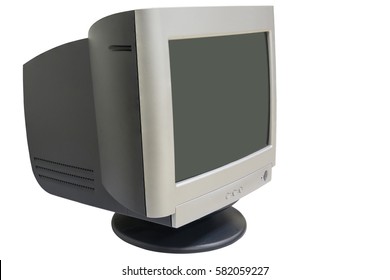
Image result for crt monitor

https://www.shutterstock.com/search/crt+monitor

LCD Monitors

– Liquid Crystal Display (LCD) technology has been used in laptops for some time. It has recently been made commercially available as monitors for desktop PCs.

Image result for lcd monitor

https://www.lg.com/in/lcd-monitors/lg-N1941W-network-monitor

LED Monitors
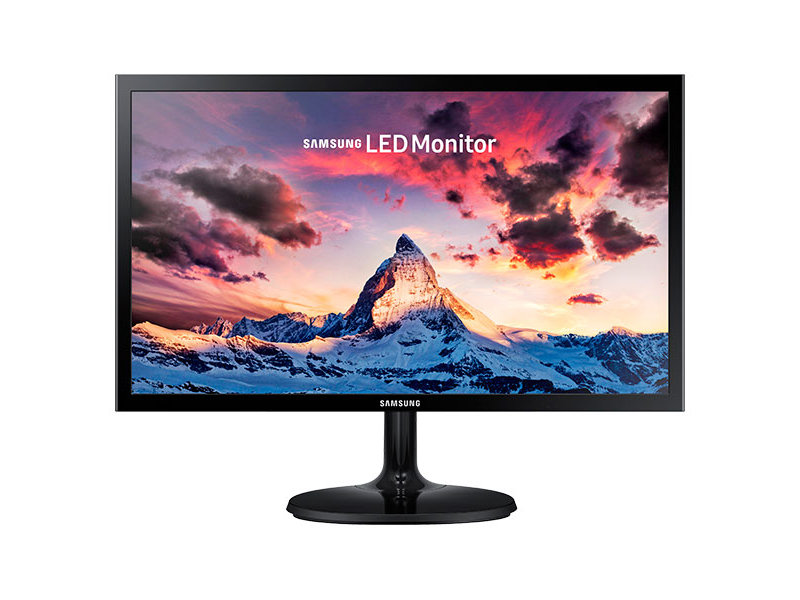
– (Light Emitting Diode) – A display and lighting technology used inalmost every electrical and electronic product on the market, from a tiny on/offlight to digital readouts, flashlights, traffic lights and perimeter lighting.

22” SF350 LED Monitor

https://www.samsung.com/us/computing/monitors/led/samsung-22-led-monitor-ls22f350fhnxza/

2. LCD Projectors
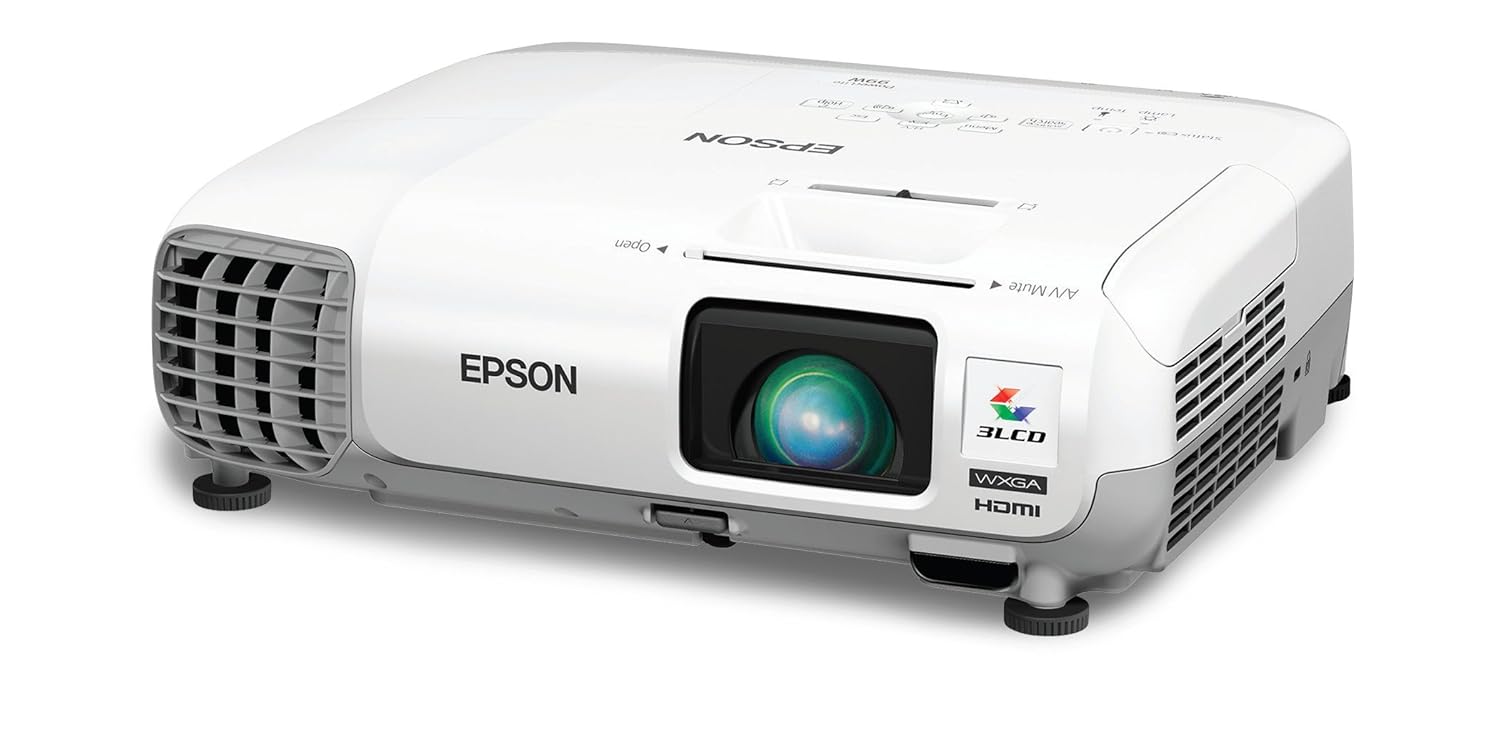
– Utilize two sheets of polarizing material with a liquid crystal solution between them. An electric current passed through the liquid causes the crystals to align so that light cannot pass through them.Each crystal, therefore, is like a shutter, either allowing light to pass through or blocking the light.

3. Smart Board 

– A type of display screen that has a touch sensitive transparent panel covering the screen, which is similar to a touch screen.

Image result for smart board

https://www.indiamart.com/proddetail/smart-interactive-white-board-9963238248.html

Printer 

 – A device that prints text or illustrations on paper.

Types of printer


Ink-Jet or Bubble-Jet Printer 

– spays ink at a sheet of paper. Ink-jet printers produce high-quality text and graphics.b)

Laser Printer 

– Uses the same technology as copy machines. Laser printers produce very high quality text and graphics.c) 

LCD and LED Printer

– Similar to a laser printer, but uses liquid crystals or light-emitting diodes rather than a laser to produce an image on the drum.d)

Line Printer 

– Contains a chain of characters or pins that print an entire line atone time. Line printers are very fast, but produce low-quality print.

Thermal Printer

– An inexpensive printer that works by pushing heated pins against heat-sensitive paper. Thermal printers are widely used in calculators and fax machines.5.

Speakers 

– Used to play sound. They may be built into the system unit or connected with cables. Speakers allow you to listen to music and hear sound effects from your computer.

What is a Storage Device?

Aside from the devices attached on a PC, there are also the so called storage devices that perform a special task in computing system. Storage device is any apparatus for recording computer data in a permanent or semi-permanent form.

Types of storage devices


Floppy diskette

– is a random access, removable data storage medium that can be used with personal computers. The term usually refers to the magnetic medium housed in a rigid plastic cartridge measuring 3.5 inches square and about 2 millimeters thick. Also called a “3.5-inch diskette,” it can store up to 1.44 megabytes(MB) of data.

Compact disc (CD)

– also called optical disc is a nonmagnetic, polished metal disk used to store digital information. The disc is read by the CD- ROM.

Digital Versatile Disc (DVD)

– an optical disc technology with a 4.7 gigabyte storagecapacity on a single-sided, one-layered disk, which is enough for a 133-minutemovie.

Jump drive and USB flash drive

– is a plug-and-play portable storage device that uses flash memory and is lightweight enough to attach to a key chain. A USB drive can be used in place of a floppy disk, Zip drive disk, or CD.

Hard drive-

is the main, and usually largest, data storage device in a computer.The operating system, software titles and most other files are stored in the hard diskdrive.

LS-120

is a drive which supports a special floppy diskette which can store up to120MB of information as well as being backwards compatible and still supporting thestandard 1.44MB floppy diskettes.

Zip drive

–  is a small, portable disk drive used primarily for backing up and archiving personal computer files.
Reference :

Leave a comment